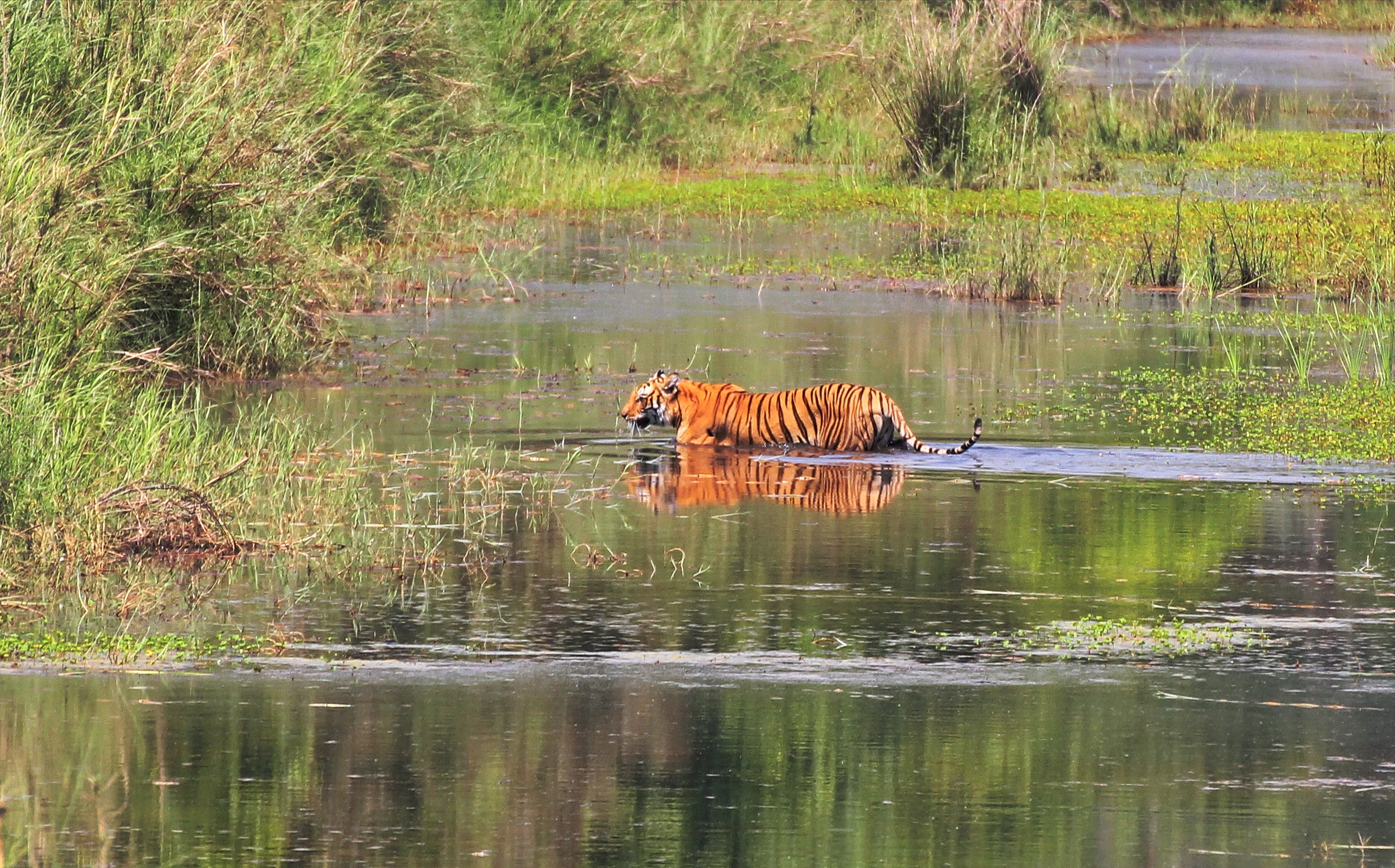
Bardiya National Park is Nepal’s largest and most pristine national park in the Terai region, covering an area of 968 square kilometers. Renowned for its rich biodiversity, the park is home to the endangered Royal Bengal tiger, one-horned rhinoceros, wild elephants, and over 400 species of birds. With its dense forests, grasslands, and the scenic Karnali River, Bardiya offers an authentic wildlife experience, making it a perfect destination for nature lovers, birdwatchers, and adventure seekers.
Table of Contents
History of the Bardia National Park
The history of Bardia National Park is deeply tied to regional politics, wars, and ultimate preservation. In 1815, Nepal was forced to sign the Sugauli Treaty after the Anglo-Nepalese War, which meant losing this vast western lowland territory to the British East India Company. For 45 years, this wild terrain remained a part of British India.
The land was finally returned to Nepal in 1860 by the British. This handover was a gesture of appreciation for Nepal’s military support in helping suppress the Indian Independence Movement (Indian Mutiny) in 1857. Because it was an annexed territory returned after decades, locals still refer to this entire southwestern region as “Naya Muluk”, which translates to “New Country.”
Timeline of Conservation Milestones
- Royal Hunting Reserve
- 1969 An area of 368 square kilometers was officially set aside as a private hunting sanctuary for the Nepalese Royal family and their elite guests.
- Royal Karnali Wildlife Reserve
- 1976 The territory was gazetted and upgraded to a wildlife reserve to offer legal protections to the region’s rapidly shrinking natural habitats.
- Name & Boundary Expansion
- 1982–1984 Renamed the Royal Bardia Wildlife Reserve in 1982. Two years later, the government expanded its borders significantly to include the pristine Babai River Valley.
- Official National Park Status
- 1988 The protected sanctuary was officially granted National Park status, shifting its core mission entirely toward wildlife research, community eco-tourism, and strict biodiversity conservation.
To ensure wildlife could roam entirely free from human interference, approximately 1,500 local farming families living inside the fertile Babai Valley were carefully resettled outside the park boundaries. Once farming, livestock grazing, and domestic wood collection completely stopped, the natural vegetation in the valley rapidly regenerated. This created the massive, undisturbed grassland and forest ecosystem that makes Bardia a premier habitat for tracking apex predators today.
Flora (Plants & Trees)
Thick forests cover about 70% of the park, while the rest is filled with open grasslands and rivers. It is home to more than 800 different types of beautiful plants and trees.
Fauna (All Animals)
The park is a safe haven for 642 different kinds of wild animals. Its rivers and lakes also shelter 125 types of fish alongside rare crocodiles like the long-nosed Gharial.
Mammals
You can find 53 different types of mammals here, including wild elephants, tigers, and rhinos. Rare animals like the Gangetic river dolphin and wild fishing cats also live in this water system.
Tigers
Bardia National Park has a strong and growing tiger population. When a few wild tigers with broken teeth caused trouble near villages in 2021, rangers safely captured them to protect both people and the forest.
Rhinoceros
One-horned rhinos were moved here from Chitwan starting in 1986 to help them grow safely. Even though illegal hunting hurt their numbers in the past, strict new security has helped the rhinos bounce back to 29 by 2015.
Elephants
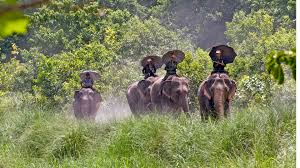
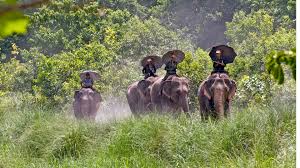
Massive wild elephants started moving into the park in 1985, including a famous giant named Raja Gaj who looked like a ancient mammoth. Today, large herds of more than 60 elephants roam across the river plains.
Birds
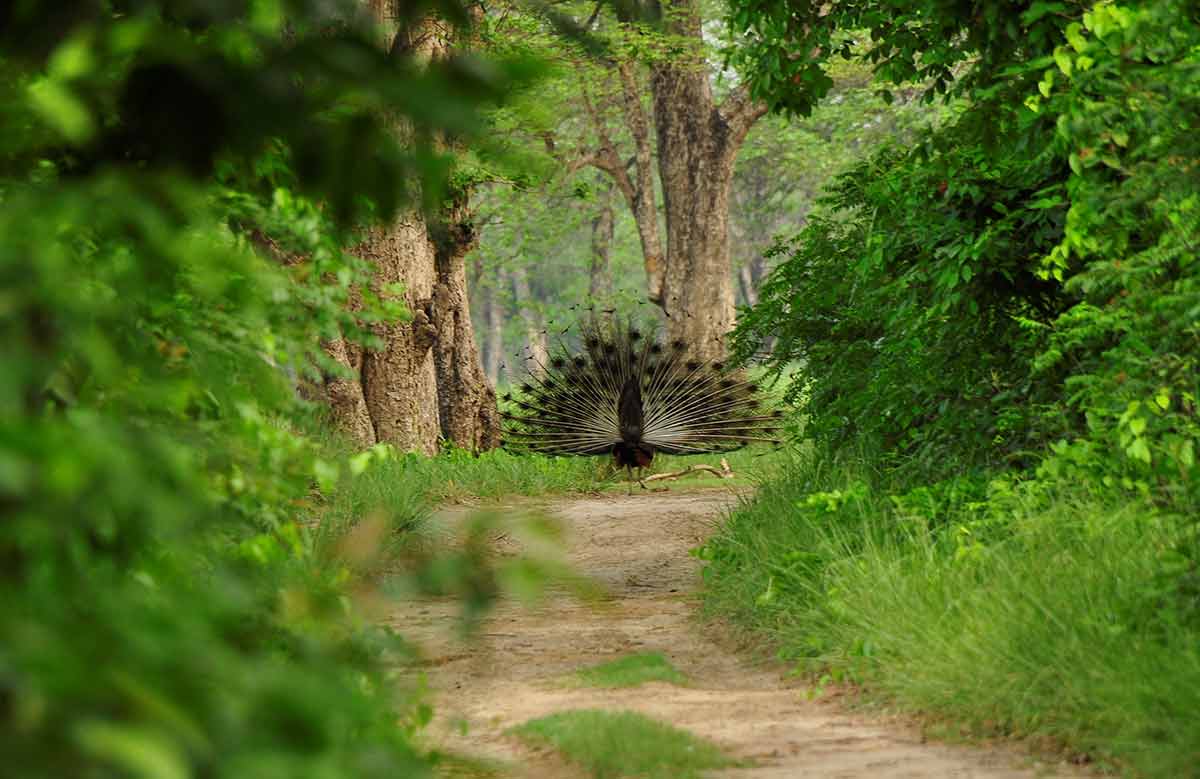
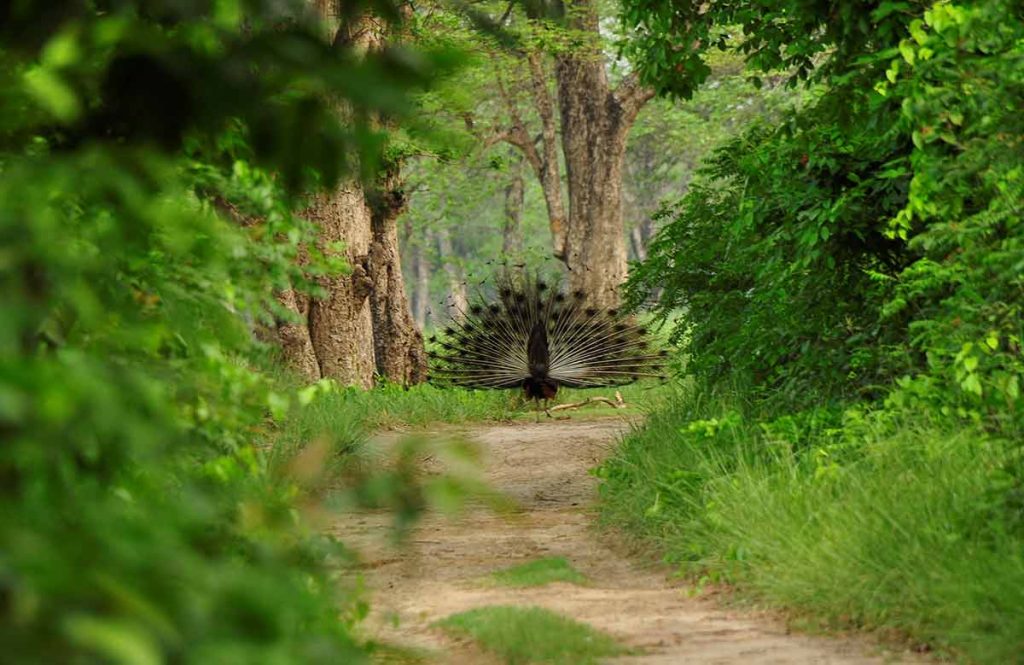
Over 400 species of birds fly through the skies of Bardia. It is a true paradise where you can easily spot colorful peacocks, giant vultures, and rare geese flying over the grasslands.
03 Nights 04 Days Bardiya National Park Tour
Located in the remote western Terai of Nepal, Bardiya National Park is the largest and most undisturbed wilderness area in the region. Unlike the busier Chitwan National Park, Bardiya offers a pristine, crowd-free sanctuary famous for its high density of Royal Bengal Tigers, wild elephants, one-horned rhinos, and vibrant indigenous Tharu culture.
Highlights
- High-Probability Tiger Tracking: Guided deep-jungle walks to core habitats known for frequent Royal Bengal Tiger sightings.
- Full-Day Wilderness Exploration: Full-day 4WD open jeep safaris reaching the undisturbed interior zones of the national park.
- Karnali River Float Safari: A peaceful drift down the river to spot rare Gangetic dolphins, gharial crocodiles, and marsh muggers.
- Authentic Cultural Immersive: Walks through traditional Tharu villages and an evening performance of the Tharu stick dance.
- Diverse Wildlife Encounters: Spotting one-horned rhinoceroses, swamp deer (Barasingha), wild elephants, and over 400 species of exotic birds.