
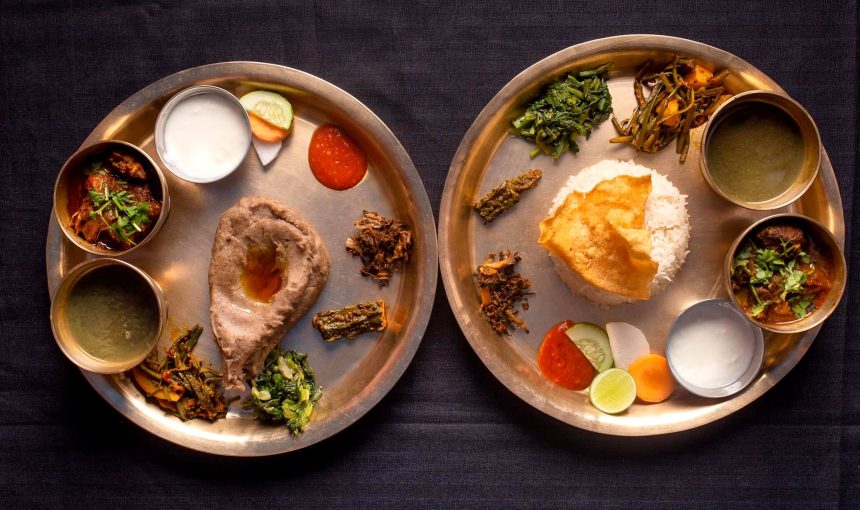
To truly understand the culture of Nepal, one must dive into its culinary heritage, where every dish tells a story of the mountains, the people, and the ancient traditions that bind them. From the high-altitude pastures of the Himalayas to the bustling streets of Kathmandu, the flavors of Nepal are defined by Dal Bhat for its daily energy, Dhido for its nutrient-rich heritage, Momo for its unmatched popularity, Thakali Khana Set for its refined local spices, and Selroti for its festive sweetness. Together, these five dishes are not just food; they are the literal soul of the country.
Table of Contents
Top 5 Dishes You Must Try
Nepal is a land of incredible geographical diversity, and its food is no different. Whether you are a trekker looking for the famous “Dal Bhat Power” or a traveler wanting to explore Newari and Thakali flavors, the Nepali kitchen offers a sensory experience like no other.
In this guide, we explore the top five traditional dishes that define the nation.
1. Dal Bhat: The National Energy Source
If there is one dish that defines life in Nepal, it is Dal Bhat. This meal is so central to the culture that it is eaten twice a day in almost every household. It consists of Dal (a thick lentil soup), Bhat (steamed rice), and Tarkari (seasonal vegetable curry).
Why it’s more than just a meal:
Dal Bhat is the ultimate balanced diet. The lentils provide high-quality plant-based protein, while the rice offers the carbohydrates needed for the physically demanding life in the hills. Most sets also come with a side of Achar (spicy pickle) and Gundruk (fermented leafy greens), which provide essential probiotics for digestion.
- Pro Tip: Look for “unlimited refills.” In most local eateries, the servers will continue to offer you more rice and lentils until you are completely full.
2. Dhido: The Ancient Himalayan Superfood
Before rice became a staple in the mountainous regions, there was Dhido. This is a thick, porridge-like dish made by boiling flour—usually millet, buckwheat, or corn—and stirring it continuously until it reaches a dense, dough-like consistency.
A Nutritious Powerhouse:
Dhido is highly valued for being gluten-free and rich in fiber. It is traditionally served with a small bowl of melted ghee, local chicken gravy, or a tangy soup made from fermented greens.
- The Experience: Eating Dhido is an art. You take a small portion with your fingers, dip it into the soup or curry, and swallow it without chewing. This method is said to keep you feeling full and energized for much longer than rice.
3. Momo: The Unofficial King of Street Food
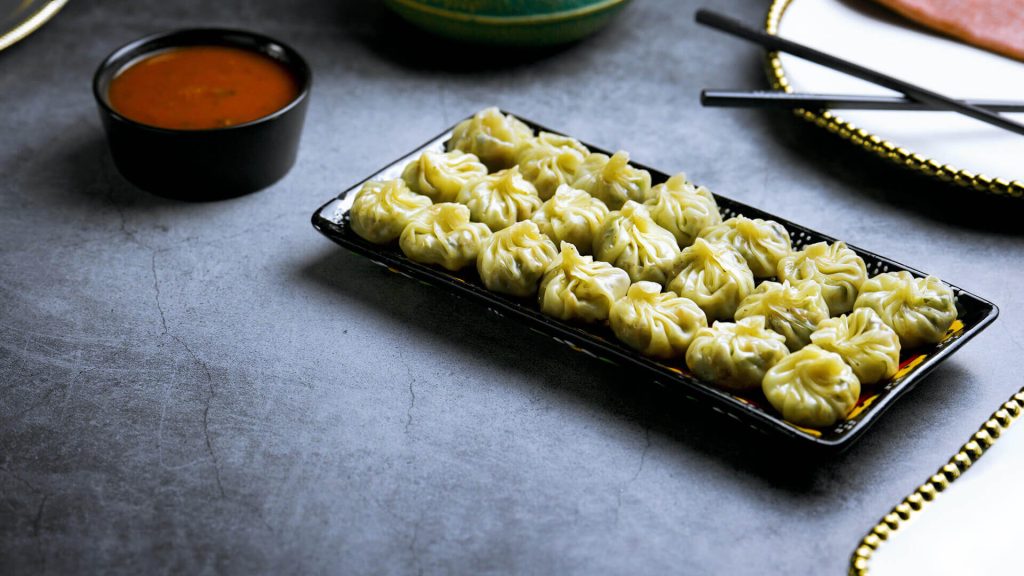
You cannot walk a block in Kathmandu without smelling the aroma of steaming Momos. These dumplings are arguably the most popular food in Nepal. Originally influenced by Tibetan flavors, the Nepali Momo has evolved into its own spicy, herb-infused masterpiece.
Varieties to Explore:
- Steamed Momos: The classic version, served with a spicy tomato and sesame dipping sauce (Momo Achar).
- Kothey Momos: Half-steamed and half-fried for a satisfying crunch.
- Jhol Momos: Dumplings drowned in a bowl of spicy, tangy liquid chutney—perfect for chilly mountain evenings.
Whether filled with minced buffalo meat (Buff), chicken, or fresh vegetables, Momos are a social food often shared among friends at every celebration.
4. Thakali Khana Set: The Gourmet Mountain Feast
The Thakali Set is essentially a premium, high-altitude version of Dal Bhat. It originates from the Thak Khola region of the Mustang district, along the ancient salt trade routes. The Thakali people are legendary for their hospitality and their culinary precision.
The Secret Ingredients:
What makes a Thakali set different is the attention to detail. The lentils are often tempered with Jimbu (a dried Himalayan herb with an onion-like flavor) and Timur (Himalayan Szechuan pepper), which adds a unique citrusy tingle to the palate.
- The Sides: A true Thakali set is served on a brass plate and includes fresh Ghee, spicy Sukuti (dried meat), and a fermented radish pickle that balances the richness of the meal.
5. Selroti: The Golden Ring of Festivals
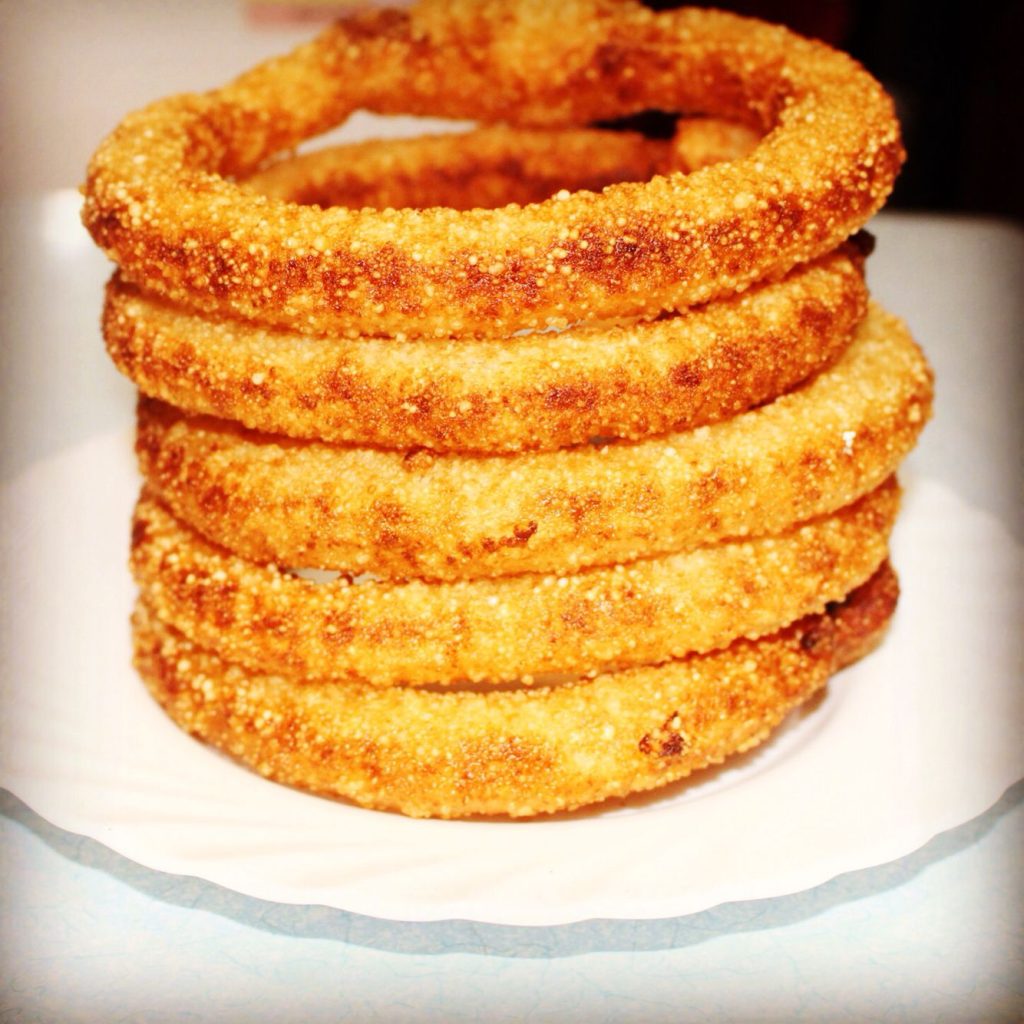
No Nepali festival, especially Dashain or Tihar, is complete without Selroti. This is a ring-shaped, deep-fried rice bread that resembles a thin, crispy donut. It is made from a batter of soaked rice flour, sugar, and ghee, flavored with cloves and cardamom.
A Symbol of Celebration:
Selroti is as much a cultural symbol as it is a snack. It has a unique texture—crispy on the outside and soft on the inside. It is traditionally eaten as a breakfast or snack, often paired with a cup of hot milk tea or a spicy potato curry (Aloo ko Achar).
- Longevity: One of the best things about Selroti is that it can be stored for up to two weeks, making it the perfect travel snack or a thoughtful gift to send to family members far from home.
A Taste You Won’t Forget
Nepali cuisine is a reflection of the country’s resilience and warmth. Whether it’s the daily ritual of Dal Bhat or the festive sweetness of Selroti, these dishes offer a deep connection to the land and its history. On your next visit to Nepal, make sure to look beyond the international menus and try these five authentic classics.
What is the most popular food in Nepal?
While Dal Bhat is the daily staple eaten by almost every Nepali twice a day, Momo is considered the most popular snack and street food. If you visit Nepal, you will find Dal Bhat in every home and Momos on every street corner.
Is Nepali food very spicy?
Nepali food is flavorful and uses many spices, but it is generally not as “hot” as some regional Indian cuisines. The heat usually comes from the Achar (side pickle) or fresh green chilies served on the side, so you can often control the spice level yourself.
Why is “Dal Bhat Power, 24 Hour” a famous saying?
This is a popular phrase among trekkers in the Himalayas. Because Dal Bhat offers a perfect balance of slow-release carbohydrates (rice), protein (lentils), and minerals (vegetables), it provides sustained energy for long mountain climbs. Plus, most places offer free refills!