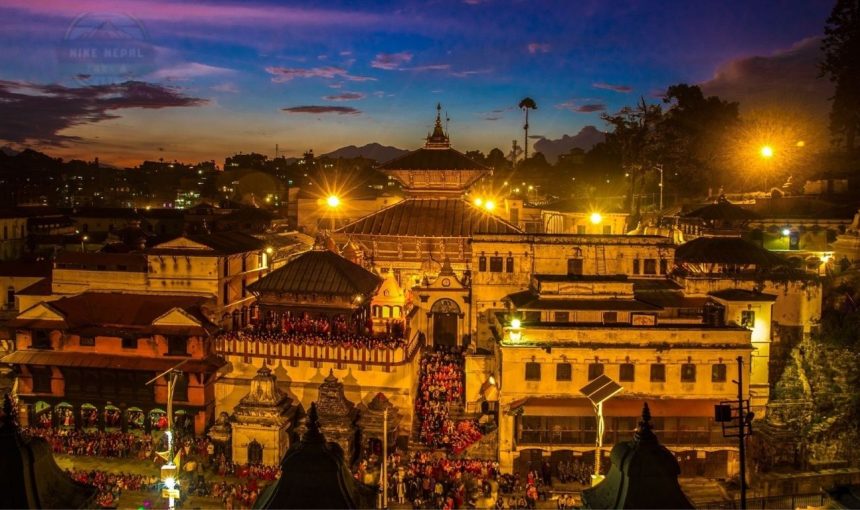
Dating back to at least the 5th century under the Licchavi rulers, the history and significance of Pashupatinath Temple lies in its status as the oldest and most sacred Hindu temple complex dedicated to Lord Shiva in Nepal. Situated gracefully on the banks of the holy Bagmati River in Kathmandu, this UNESCO World Heritage site serves as the ultimate spiritual epicenter of Shiva devotion worldwide. The temple is globally renowned for its stunning two-tiered golden pagoda architecture, its vibrant community of colorful Sadhus, and its deeply profound cultural role in witnessing the continuous, sacred lifecycle rituals of life, death, and reincarnation.
Whether you are a spiritual pilgrim drawing close to Lord Shiva or an international traveler seeking to understand the deep cultural roots of Kathmandu Valley, stepping into this sacred precinct can feel overwhelming without the right guidance. In this comprehensive visitor blueprint, you will uncover the deep historical timelines of the site, explore the breathtaking architectural layout, and learn the exact daily schedules for the mesmerizing evening Bagmati Aarati. Furthermore, we provide essential, up-to-date practical logistics—including foreigner entry fees, strict local dress codes, and cultural etiquette rules—to ensure your journey through Pashupatinath is smooth, deeply respectful, and unforgettable.
Table of Contents
History and Significance of Pashupatinath Temple
Mythological Origins
The mystical beginnings of the Pashupatinath Temple are deeply woven into ancient legends that have been passed down through generations. According to the most prominent Hindu mythology, Lord Shiva eventually grew weary of his heavy cosmic responsibilities at his celestial home in Mount Kailash. Seeking a peaceful retreat away from his divine duties, he traveled down to Earth accompanied by his consort, Goddess Parvati. They discovered the lush, untouched beauty of the Shlesmantak forest, located on the eastern banks of what is now the holy Bagmati River in the Kathmandu Valley.
To avoid being recognized by the other gods, Lord Shiva and Parvati transformed themselves into two stunning, golden deer and spent their days roaming freely through the quiet woodlands. Over time, the other deities noticed Lord Shiva’s prolonged absence and began searching the universe for him. Upon discovering his secret hiding spot in the forest, they tried to persuade him to return to his spiritual duties.
When Lord Shiva refused, a gentle struggle ensued. As one of the gods attempted to catch the divine deer by his horns, the majestic beast lunged forward, causing one of his three-pronged antlers to break apart into pieces. The broken fragment fell deep into the earth, where it materialized as the very first sacred Shiva Lingam—a holy stone symbol embodying the infinite power of Lord Shiva.
For centuries, this sacred artifact remained hidden beneath the soil, forgotten by the world. The legend continues with a local cow herder who noticed a strange pattern involving one of his most productive cows. Every single day, the cow would walk over to a specific, unassuming mound of earth in the forest and gently allow her milk to flow directly onto the dirt. Intrigued and amazed by this bizarre behavior, the local community gathered to dig beneath the surface. To their astonishment, they uncovered the radiant, lost Shiva Lingam. Recognizing the profound divine energy of the spot, the locals constructed a modest wooden shrine over the stone, marking the true mythological birth of the Pashupatinath temple site.
Historical Timeline
Beyond the realms of myth, the recorded history of Pashupatinath Temple spans well over a thousand years, making it an architectural anchor of the Kathmandu Valley. Archaeological evidence and ancient stone inscriptions attribute the foundation of the first proper, structured temple building to King Shupuspa of the Licchavi Dynasty around the 5th century. Early historical accounts suggest that this ancient monarch took the existing primitive shrine and replaced it with an impressive, multi-layered wooden temple to honor the deity.
As the centuries progressed, the temple complex grew significantly under the patronage of successive rulers. During the medieval period, Nepal entered the Malla era—a golden age for art, culture, and architecture. The Malla kings, deeply devoted to Lord Shiva, heavily invested in expanding the holy site. They added numerous smaller stone shrines, built rest houses (dharmashalas) for traveling pilgrims, and introduced intricate artistic elements to the main sanctuary.
However, preserving a massive wooden temple across the centuries proved to be a continuous battle against the elements and natural disasters. The structure faced quiet threats from wood-boring insects and decay, which required periodic renovations. Far more devastating, however, were the violent earthquakes that periodically shake the Himalayan region.
In the late 17th century, the main building suffered severe structural degradation and had to be completely rebuilt from its foundations. The elegant, double-roofed pagoda design that visitors see standing today is the direct result of that massive reconstruction project, completed in 1692. More recently, when a catastrophic earthquake struck Nepal in 2015, leveling many historic monuments nearby, the ancient inner sanctum of Pashupatinath miraculously withstood the tremors completely unscathed—a testament to both its exceptional engineering and its sacred resilience.
Spiritual Significance
Pashupatinath is far more than a collection of historic monuments; it stands as the beating spiritual heart of the Hindu faith in Nepal and ranks among the four most important religious sites dedicated to Lord Shiva globally. The name “Pashupati” carries an incredibly profound meaning in Sanskrit: “Pashu” translates to animals or all living creatures, while “Nath” translates to master, lord, or protector. Thus, Lord Shiva is revered here not as a distant destroyer, but as the kind, compassionate guardian of all living souls across the universe.
For millions of practicing Hindus worldwide, embarking on a pilgrimage to Pashupatinath at least once in their lifetime is an ultimate spiritual goal. It is widely believed that offering prayers within these holy grounds cleanses a person of negative karma, brings immense divine blessings, and ensures a peaceful transition for the soul into the afterlife. Because of this deep connection to eternity, the open-air cremation platforms (ghats) along the Bagmati River operate continuously, where families bring their loved ones to be returned to the elements in the shadow of the god.
The spiritual energy of the entire complex reaches its absolute peak during the annual festival of Maha Shivaratri (the Great Night of Shiva). During this massive celebration, hundreds of thousands of pilgrims, sadhus (holy ascetics), and travelers from across Nepal and India converge upon the site. The entire atmosphere completely transforms; the air thickens with the scent of burning incense and wood fires, while the rhythmic sound of ringing brass bells, blowing conch shells, and intense group chanting echoes through the night. It creates a powerful, hypnotic environment of pure devotion that leaves a lasting impression on anyone who experiences it.
Architectural Marvels
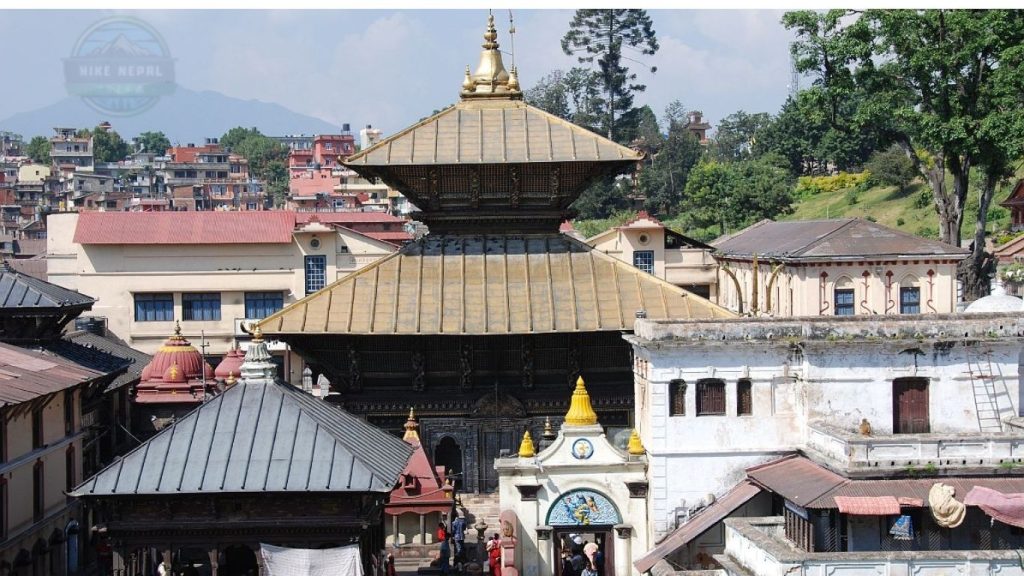
When you approach the inner courtyard of the temple, the sheer brilliance of traditional Nepalese craftsmanship becomes immediately evident. The central shrine is built in the classic Nepalese pagoda style, featuring a square base that tapers elegantly into two grand tiers. The sweeping, wide-eaved roofs are constructed from heavy copper sheets that have been completely gilded in a thick layer of pure, shimmering gold. At the very apex of the upper roof sits a heavy golden pinnacle (gajur), shining brightly against the backdrop of the Kathmandu sky as a beacon of cosmic energy.
To allow access for devotees, the main pagoda features four massive entrance doors, one facing each cardinal direction. Every single one of these doors is heavily plated in solid, polished silver and intricately carved with detailed reliefs depicting guardian deities, sacred symbols, and ancient mythological stories. The wooden struts supporting the golden roofs are also masterpieces of art, hand-carved out of local timber to display various multi-armed forms of Lord Shiva and other celestial beings.
Directly outside the western entrance of the main temple stands another unforgettable architectural landmark: a colossal, heavy statue of Nandi the bull. In Hindu tradition, Nandi is celebrated as Lord Shiva’s extremely loyal mount, companion, and gatekeeper. This massive figure is cast out of heavy metal and beautifully accented with gold leaf. It rests in a peaceful, kneeling position on an elevated stone platform, facing the inner sanctum for eternity. The sheer scale of the bull, combined with the golden roofs and silver doors, perfectly showcases the incredible wealth of artistry and devotion poured into this holy place by ancient craftsmen.
Best Time to Visit Pashupatinath Temple During the Day
Morning Window (4:00 AM – 12:00 PM)
The early morning hours offer the most peaceful and spiritually authentic atmosphere of the day at Pashupatinath. Arriving between 4:00 AM and 10:00 AM allows you to witness the traditional morning prayers (puja), hear the gentle chanting of local priests, and watch devotees offer fresh flowers and milk to the shrines. The air is crisp, the temperature is cool, and the heavy afternoon tourist crowds have not yet arrived. This is the perfect window for quiet contemplation, photography around the outer terraces, and experiencing the temple grounds in their truest, most meditative state.
Evening Window (5:00 PM – 9:00 PM)
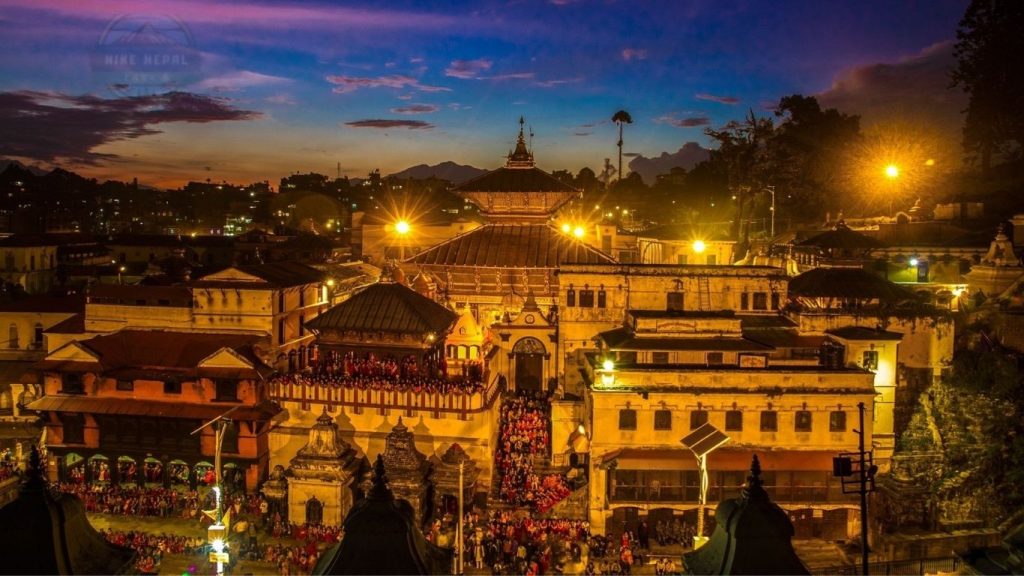
If you want to experience the vibrant, high-energy spiritual life of Kathmandu, the evening window is unmatched. As the sun begins to set, the entire complex lights up with oil lamps, and a powerful sense of community fills the air. This is the ultimate time to watch the famous Bagmati River Aarati ritual, where music, fire, and devotion come together. The energy during these hours is hypnotic and deeply moving, making it a favorite for cultural travelers who want to see how the ancient site breathes at night.
Midday Closure Notice (12:00 PM – 5:00 PM)
It is incredibly important to plan your itinerary around the daily afternoon gap. From 12:00 PM to 5:00 PM, the main golden pagoda temple doors are completely shut, and the inner sanctum goes into a period of rest. While you can still walk around the open public terraces, view the cremation ghats, and see the smaller outer shrines during these hours, you will not be able to catch a glimpse of the central holy Shiva Lingam or see the primary courtyards in action. To make the most of your trip, always aim for the active morning or evening windows!
Pashupatinath Bagmati Aarati Timing and Schedule
What is the Sandhya Aarati?
The Sandhya Aarati (Evening Aarati) is a deeply moving and visually stunning Hindu ritual that takes place on the banks of the sacred Bagmati River, right under the shadow of the main temple. During this ceremony, three specially trained priests stand on raised stone platforms facing the river to perform a beautifully synchronized worship dance. They wave massive, multi-tiered brass oil lamps, ring large bells, and lift smoking incense into the air.
The entire ritual is performed to the rhythm of powerful Vedic chants, traditional drums (dhimales), and classical flutes played by local musicians. It is a celebratory worship ceremony dedicated entirely to honoring Lord Shiva, the holy river Bagmati, and the divine energy of the universe. The combination of fire, smoke, and music creates an unforgettable, hypnotic environment that brings a deep sense of peace to everyone watching.
Daily Timing
This ancient ceremony takes place every single night of the year without exception, rain or shine. The priests light the lamps and begin the primary chants promptly at 6:00 PM every evening. The entire ritual lasts for approximately one hour, concluding around 7:00 PM as the final blessings are offered to the crowd and the river.
Insider Visitor Tip
Because the evening Aarati is incredibly popular with both local devotees and international travelers, the riverbank becomes tightly packed very early. For the absolute best view of the action, you should plan to arrive at the site by 5:30 PM.
Instead of staying on the temple side where the priests stand, walk across the small pedestrian bridges to the ancient stone steps (the ghats) directly opposite the main platforms. Finding a seat high up on these stone stairs gives you an elevated, unobstructed view of the entire ceremony, the glowing lamps, and the beautiful reflections on the water as night falls.
Rules and Dress Code for Visiting Pashupatinath Temple
Non-Hindu Access Restrictions
When planning your visit to Pashupatinath, it is incredibly important to understand the boundary rules regarding who can enter specific areas. While the massive outer heritage site is fully open to everyone, the main inner sanctum courtyard—where the central golden pagoda stands—is strictly reserved for Hindu devotees only. If you are a non-Hindu traveler, you will not be allowed to step past the main Western gate.
However, do not let this discourage you from visiting! Non-Hindu visitors can still explore roughly 80% of the entire complex. You can walk along the open riverside paths, wander through the historic terraces directly across the Bagmati River, explore hundreds of smaller ancient stone shrines, and get a clear, elevated view of the inner courtyard and the giant golden Nandi statue from the stone viewing platforms just across the bridge.
Required Dress Code
Because Pashupatinath is an active, deeply revered place of worship, all visitors are expected to dress modestly and respectfully. Both men and women must wear clothing that completely covers their shoulders and knees. Shorts, short skirts, crop tops, and sleeveless shirts are strictly prohibited within the heritage area.
The ideal clothing choice is loose-fitting, comfortable pants or long skirts paired with a t-shirt or long-sleeved shirt. If you happen to arrive in clothing that is too revealing, you can easily purchase a traditional, lightweight cotton wrap shawl at one of the small market stalls near the main entrance gates to cover up before stepping onto the holy grounds.
Prohibited Items
To preserve the spiritual purity of the sacred spaces, there are strict rules regarding what you can carry with you. Before you step onto any of the stone viewing platforms or enter any inner courtyards, you must remove all leather items completely. In the Hindu faith, cows are considered highly sacred, which means items made from cowhide or animal leather—such as leather belts, bags, wallets, and shoes—are not allowed near the shrines.
It is highly recommended to wear simple slip-on shoes or sandals that do not use leather, as you will need to take them off frequently when climbing onto sacred terraces. You can safely carry a fabric daypack or canvas bag to store your daily essentials instead.
Safety Warning: Navigating the Resident Monkeys
The forested hills surrounding Pashupatinath are home to hundreds of wild, resident rhesus macaque monkeys. While these animals are viewed as part of the sacred environment, they are highly mischievous, incredibly clever, and completely accustomed to human presence.
To ensure a safe visit, follow a few simple rules:
- Hide all food and drinks: Never walk around holding visible snacks, plastic shopping bags, or open water bottles, as the monkeys will confidently jump on you to steal them.
- Secure your loose belongings: Keep your sunglasses, cameras, phone straps, and hanging jewelry tucked safely away inside a zipped backpack.
- Avoid direct eye contact: Monkeys view long, direct eye contact as a sign of aggression. If a monkey approaches you, stay calm, avoid showing your teeth or flashing a camera smile, and walk away smoothly without panicking or waving your arms.
Pashupatinath Temple Entry Fee for Foreigners
Ticket Prices
To visit the ancient Pashupatinath heritage site, international travelers must purchase a entry ticket. The pricing structure is organized by nationality and age group:
- Other Foreign Nationals: The entry ticket is NPR 1,500 per person.
- SAARC Nationals: Visitors from South Asian Association for Regional Cooperation countries (including Bangladesh, Bhutan, Maldives, Pakistan, Sri Lanka, and Afghanistan) receive a discounted ticket price of NPR 1,000 per person.
- Nepali and Indian Citizens: Entry is entirely free of charge.
- Children under 10: Young children of any nationality can enter the complex completely free.
Where to Purchase
You should never buy tickets from random street guides or individuals outside the gates. Verified entry tickets must be purchased directly from the official ticket counters run by the Pashupati Area Development Trust (PADT). These clearly marked counters are located right next to the main entrance gates leading into the temple complex. Please make sure to carry cash in Nepalese Rupees (NPR), as the official counters generally do not accept credit cards or foreign currencies.
What it Includes
Your entry ticket grants you full access to explore the vast historical and cultural areas of this massive open-air museum. While the innermost pagoda courtyard is reserved for Hindu devotees, your ticket allows you to walk through all the open public courtyard areas, explore hundreds of ancient stone structures, and visit the historical votive shrines scattered across the hills.
Additionally, your ticket includes access to the open riverside terraces and the designated viewing spots directly across the water from the cremation ghats. This allows you to witness the continuous cultural life, traditional funeral rituals, and the evening Aarati ceremonies respectfully from a comfortable distance.
Conclusion & Local Hub Recommendation
A Living Heritage Like No Other
Pashupatinath Temple stands as a profound testament to the living history, deep architectural mastery, and unmatched spiritual weight of the Kathmandu Valley. It is one of the very few places on earth where centuries-old traditions, ancient sacred architecture, and the deepest cycles of life and death are observed seamlessly in real time, completely uninterrupted. Whether you are drawn to the quiet tranquility of its morning prayers or the roaring, fire-lit devotion of its evening rituals, visiting this sacred complex offers a rare, transformative window into the beating heart of Hindu culture.
Let Us Navigate Your Journey
Navigating the immense history, subtle rules, and hidden architectural gems of a massive heritage site like Pashupatinath is always best done alongside true local experts. Our agency specializes in crafting seamless, deeply respectful cultural journeys across the valley, ensuring you don’t just see the sights, but truly understand the local stories and traditions behind them.
Preparing for your cultural journey through Kathmandu? We would love to take the logistical stress completely off your shoulders. We can personally arrange your cozy hotel accommodations right here in the city, coordinate seamless airport pick-up and drop-off services, and provide full access to our private vehicle services for effortless sightseeing. Our team of fully licensed local guides is ready to help you navigate Kathmandu’s incredible heritage safely, comfortably, and authentically.
Contact our team today to lock in your custom Kathmandu itinerary or arrange your local transport
Frequently Asked Questions About Pashupatinath
Can non-Hindus enter the main Pashupatinath Temple building?
No, the innermost courtyard and the main golden pagoda temple building are strictly reserved for Hindu devotees. However, non-Hindu travelers and international tourists can freely explore the massive surrounding complex, the open terraces across the Bagmati River, the ancient votive shrines, and watch the evening Aarati ceremonies openly.
What is the Pashupatinath temple entry fee for foreigners?
The entry ticket for international foreign nationals is NPR 1,500 per person. For SAARC nationals, the discounted entry ticket is NPR 1,000 per person. Children under the age of 10, as well as citizens of Nepal and India, can enter the temple heritage site completely free of charge. Tickets must be purchased in cash at the official counters near the main entrance gates.
What is the exact Pashupatinath bagmati aariti timing and schedule?
The spiritual Bagmati River Aarati ceremony takes place every single evening starting promptly at 6:00 PM. The entire ritual of devotional music, Vedic chants, and synchronized oil lamp dances lasts for approximately one hour. To secure a comfortable seating spot on the stone steps directly across the river from the main priests, it is highly recommended that you arrive by 5:30 PM.
Are there strict rules and dress code for visiting Pashupatinath temple?
Yes. All visitors must dress modestly out of respect for the sacred grounds; shoulders and knees must be fully covered, and sleeveless shirts or short skirts are not allowed. Additionally, all leather items—including shoes, belts, and bags—must be removed before stepping onto the elevated holy viewing platforms. Keep a safe distance from the resident monkeys and avoid carrying loose food items in your hands.
Why is the Pashupatinath Temple so famous?
Pashupatinath is globally famous because it is the oldest, largest, and most sacred Hindu temple complex dedicated to Lord Shiva in Nepal. Beyond its magnificent dual-roofed golden pagoda architecture, it serves as an irreplaceable living cultural site where continuous daily rituals, ancient ascetic lifestyle displays by holy Sadhus, and traditional open-air cremation rituals have occurred uninterrupted for centuries.