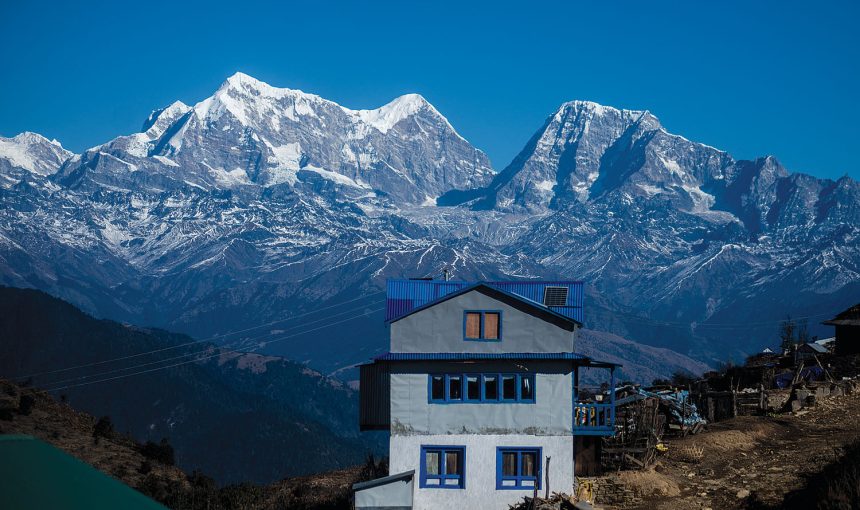
If you want to reach Everest Base Camp without flying from Kathmandu, the best way is to travel by road via Salleri or Thamdanda. You can take a local jeep or private vehicle from Kathmandu to Thamdanda, which currently serves as the closest road-head to the Everest region. This scenic overland journey takes about 12 to 14 hours and allows you to skip the unpredictable Lukla flight entirely. From Thamdanda, you will begin your trek on foot through Paiya and Surke, eventually joining the classic Everest trail at Chheplung. Choosing this road route not only provides a safer alternative to flying but also helps with gradual altitude adjustment and reduces your overall trekking expenditure.
Table of Contents

Why Skip the Lukla Flight?
While the flight to Lukla is famous, more trekkers are choosing the road route in 2026 for three main reasons: reliability, safety, and budget.
- Weather Reliability: Tenzing-Hillary Airport is notorious for sudden fog and high winds that can ground planes for days. By traveling overland, you eliminate the “Lukla cloud anxiety” and keep your schedule on track, as jeeps can navigate through conditions that would typically cancel flights.
- Superior Safety & Acclimatization: Flying takes you from Kathmandu (1,400m) to Lukla (2,860m) in just 35 minutes—a massive jump for your body. Starting your journey from Thamdanda or Salleri allows you to gain altitude much more slowly. This gradual ascent through the foothills is one of the best ways to “pre-acclimatize” and avoid headaches later in the trek.
- Reduced Expenditure: A flight to Lukla is often the most expensive single line item on a trekker’s list. Choosing a shared or private jeep is significantly more economical, leaving you with more funds for quality gear, better food, or extending your stay in the mountains.
The New Road Route: Kathmandu to Thamdanda
The road network in the Everest region is changing rapidly. While you cannot drive all the way to the base camp, the trek’s starting point has moved much closer to the high mountains. This overland route follows the scenic BP Highway and the Mid-Hill Highway, offering a raw look at rural Nepal that flying simply bypasses.
Getting from Kathmandu to Salleri/Phaplu
The first stage of your journey involves an 8 to 10-hour drive from Kathmandu to Salleri (the district headquarters of Solukhumbu) or the nearby airstrip town of Phaplu. Most travelers prefer using a 4WD jeep for this 270 km stretch. The road is beautifully paved for the first six hours as you wind alongside the Sunkoshi River, but it becomes a gravelly, “off-road” adventure after passing through Okhaldhunga. Salleri is a vibrant mountain town and an excellent place to spend your first night to begin the acclimatization process at 2,362m.
The Final Drive to Thamdanda
From Salleri, the adventure intensifies as you head toward Thamdanda, which is currently the furthest point reachable by vehicle in 2026. This section takes about 5 to 6 hours to cover only 60-70 km because the road is steep, narrow, and unpaved. You will pass through traditional villages like Kharikhola and Bupsa, enjoying views of terraced farms and distant snow-capped peaks. Once the jeep drops you at Thamdanda (2,780m), you are only a short trek away from joining the main Everest trail at Surke or Chheplung, effectively skipping the need to enter Lukla entirely.
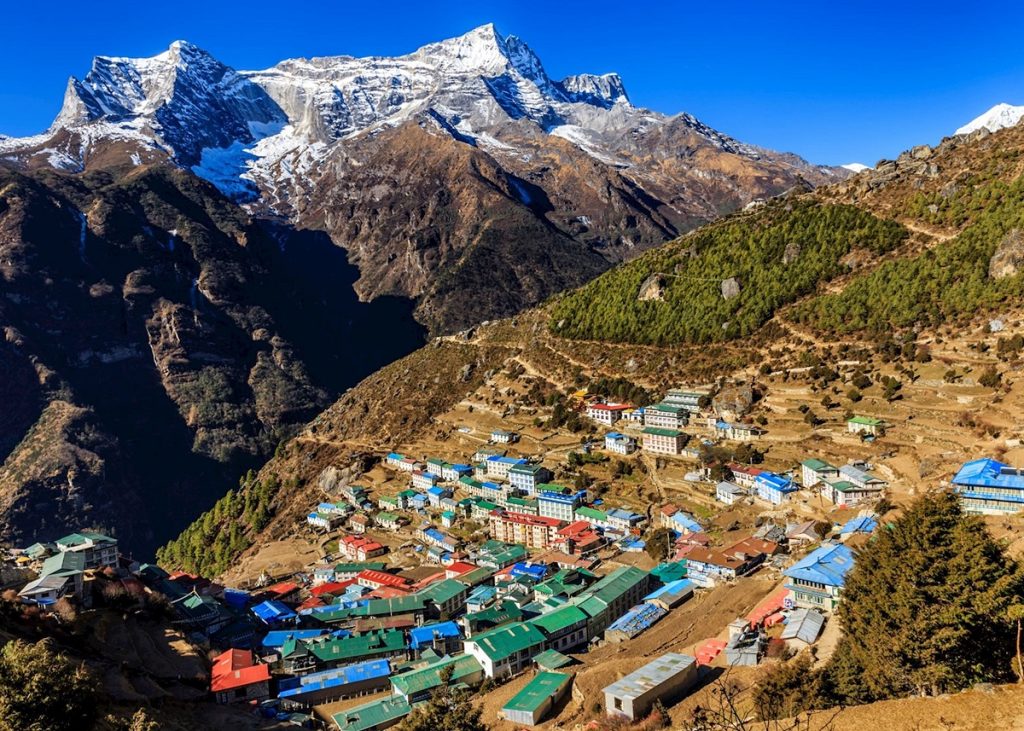
15-Day Overland EBC Itinerary
Choosing the road route adds about 2 to 3 extra days to the standard trekking timeline. While most people fly directly into Lukla (2,860m), the overland journey begins at much lower elevations, giving your body a “head start” on acclimatization.
Here is a balanced 15-day schedule that avoids the Lukla flight entirely:
- Day 1: Kathmandu to Salleri/Phaplu (2,360m) – An 8–10 hour scenic drive through the BP Highway.
- Day 2: Salleri to Thamdanda (Drive) & Trek to Paiya (2,730m) – A 5-hour rugged jeep ride followed by a 2-hour introductory hike.
- Day 3: Paiya to Phakding (2,610m) – A 6-hour trek through lush forests where you join the main Everest trail.
- Day 4: Phakding to Namche Bazaar (3,440m) – Entering the Sagarmatha National Park and the famous uphill climb.
- Day 5: Acclimatization in Namche Bazaar – Essential rest day; hike to Everest View Hotel.
- Day 6: Namche to Tengboche (3,860m) – Visit the famous monastery with Ama Dablam views.
- Day 7: Tengboche to Dingboche (4,410m) – Moving above the tree line into the alpine zone.
- Day 8: Acclimatization in Dingboche – Second rest day; hike to Nangkartshang Peak ($5,083$m).
- Day 9: Dingboche to Lobuche (4,910m) – Passing the moving memorial at Thukla Pass.
- Day 10: Lobuche to Gorak Shep (5,164m) & Everest Base Camp ($5,364$m) – Reaching the ultimate destination!
- Day 11: Kala Patthar ($5,545$m) & Trek to Pheriche (4,240m) – Sunrise peak climb and descent.
- Day 12: Pheriche to Namche Bazaar (3,440m) – A long downhill day back to comforts.
- Day 13: Namche to Surke/Paiya (2,300m) – Retracing steps toward the road-head.
- Day 14: Trek to Thamdanda & Drive to Salleri – Final hike and jeep transfer.
- Day 15: Salleri to Kathmandu – Long drive back to the city for a farewell dinner.
Why this 15-day plan is better:
By spending the first two nights between 2,300m and 2,700m, you significantly lower the risk of altitude-related headaches once you hit Namche Bazaar. It turns the “extra days” into a valuable safety investment.
Required Permits for the Road Route
Trekking to Everest Base Camp by road in 2026 requires specific paperwork. Unlike the Annapurna region, the Everest (Khumbu) region has moved away from the old TIMS card system in favor of local community management.
To legally enter the trail, you must secure the following two permits:
1. Khumbu Pasang Lhamu Rural Municipality Permit
This is a local government entry permit that replaces the TIMS card for the Everest region. It supports local infrastructure and development in the villages you will be walking through.
- Where to Get It: You cannot buy this in Kathmandu. Since you are arriving by road, you will purchase this at the local check post in Lukla or Monjo.
- Permit Expenditure: Approximately NPR 3,000 per person for the first four weeks.
2. Sagarmatha National Park Entry Permit
Because the trek takes you through a UNESCO World Heritage site, this conservation permit is mandatory to protect the fragile alpine environment.
- Where to Get It: You can obtain this at the Nepal Tourism Board office in Kathmandu or directly at the park entrance gate in Monjo. Getting it in Kathmandu is often faster as it helps you avoid the long queues at the Monjo checkpoint.
- Permit Expenditure: Approximately NPR 3,000 (plus 13% VAT) for foreigners.
Pro-Tip for Road Trekkers: If you are taking the “Classic Hillary Route” starting all the way from Jiri, you will also need the Gauri Shankar Conservation Area Permit (GCAP), which is available in Kathmandu or Shivalaya .
FAQs
Is it possible to reach Everest Base Camp without flying to Lukla?
Yes, you can reach Everest Base Camp entirely by road. The most common route is to drive from Kathmandu to Thamdanda via Salleri. From Thamdanda, it is a 2–3 day hike to join the main trekking trail that leads to Namche Bazaar and Base Camp.
How long does the drive from Kathmandu to the Everest region take?
The journey usually happens in two stages. First, a 9–10 hour drive from Kathmandu to Salleri/Phaplu. The following day, you take a secondary 4WD jeep for 5–7 hours to reach Thamdanda. While the drive is long and bumpy, it offers incredible views of the Nepalese countryside.
Which permits do I need for the overland EBC route?
You need two primary permits:
Khumbu Pasang Lhamu Rural Municipality Permit: Purchased at the checkpoint in Lukla or Monjo (approx. NPR 3,000).
Sagarmatha National Park Entry Permit: Available at the Nepal Tourism Board in Kathmandu or the park entrance in Monjo (approx. NPR 3,000).
Note: If you start from Jiri, you will also need the Gauri Shankar Conservation Area permit.
Is the road route safer than flying to Lukla?
In terms of aviation risk, yes—the road route avoids the “World’s Most Dangerous Airport.” Additionally, starting from a lower elevation (2,300m–2,700m) allows for better acclimatization, which can make your climb toward the high-altitude sections of the trek much safer and more comfortable.
Can I see Mount Everest from Pikey Peak?
Absolutely. Many people choose the road route because it allows them to detour to Pikey Peak (4,065m), which Sir Edmund Hillary famously described as his favorite spot to view Everest.You can see a massive panoramic range including Everest, Lhotse, and Makalu from the summit.
What to Pack for the Road Journey (Jeep & Trek)
Packing for an overland EBC trek in 2026 requires a bit more strategy than the standard fly-in route. Because you’ll be spending 12–15 hours in a jeep followed by 15 days of trekking, you need to balance “jeep comforts” with “trail essentials.”
1. The “Jeep Survival” Kit
The road from Kathmandu to Thamdanda is long and bumpy. Keep these in your daypack (not the duffel bag on top of the jeep):
- Neck Pillow & Eye Mask: Essential for catching sleep during the 10-hour drive.
- Motion Sickness Medication: The winding BP Highway can be tough if you are prone to car sickness.
- Snack Stash: High-energy nuts, dried fruits, and biscuits (jeep stops for food are limited).
- Dust Mask or Buff: The road sections near Thamdanda can be very dusty.
- Audio Entertainment: Download your podcasts or playlists, as mobile data is spotty in the valleys.
2. Core Trekking Gear
- Layers are Key: * Base Layer: 2 sets of moisture-wicking thermals (Merino wool is best).
- Insulating Layer: A mid-weight fleece or down sweater.
- Outer Shell: A high-quality, waterproof, and windproof Gore-Tex jacket.
- The “Big” Down Jacket: Rated for -10°C to -15°C for cold nights at Gorak Shep.
- Footwear: * Trekking Boots: Must be waterproof and well “broken-in” before you leave Kathmandu.
- Camp Shoes: Lightweight sandals or Crocs to let your feet breathe at the teahouse.
- Socks: 4–5 pairs of wool-blend trekking socks and 2 pairs of thin liner socks.
3. Electronics & Hygiene
- Power Bank: At least 20,000mAh. Charging “expenditure” in teahouses adds up, and batteries drain faster in the cold.
- Universal Adapter: Nepal uses Type C, D, and M plugs.
- Water Purification: SteriPEN or purification tablets (to avoid buying plastic bottles).
- Toiletries: Biodegradable wet wipes (your “mountain shower”), SPF 50+ sunscreen, and lip balm.
A Final Tip for the Road:
Since you are driving, you don’t have the strict 15kg weight limit imposed by Lukla flights. However, if you are hiring a porter, please keep your main duffel bag around 10–12kg out of respect for their hard work.